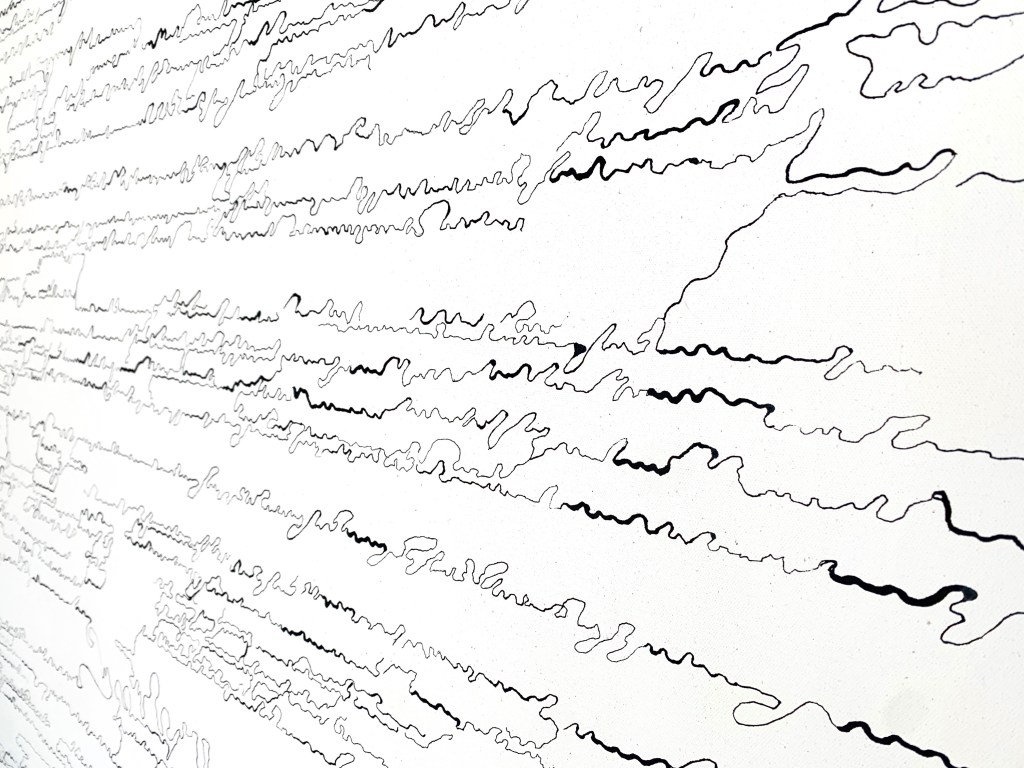
Maybe It Will Last Ten Years is a series of paintings that render the silences within the pages of the US Constitution visible through a hand-transcription of the blank spaces between words and letters on each page.
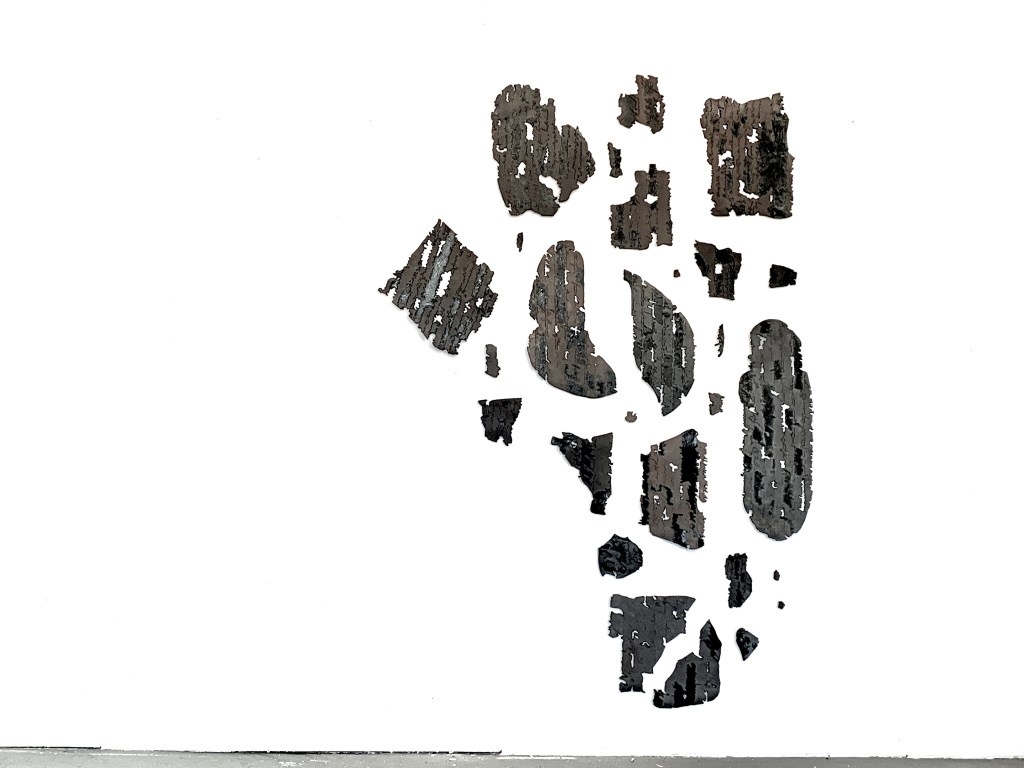
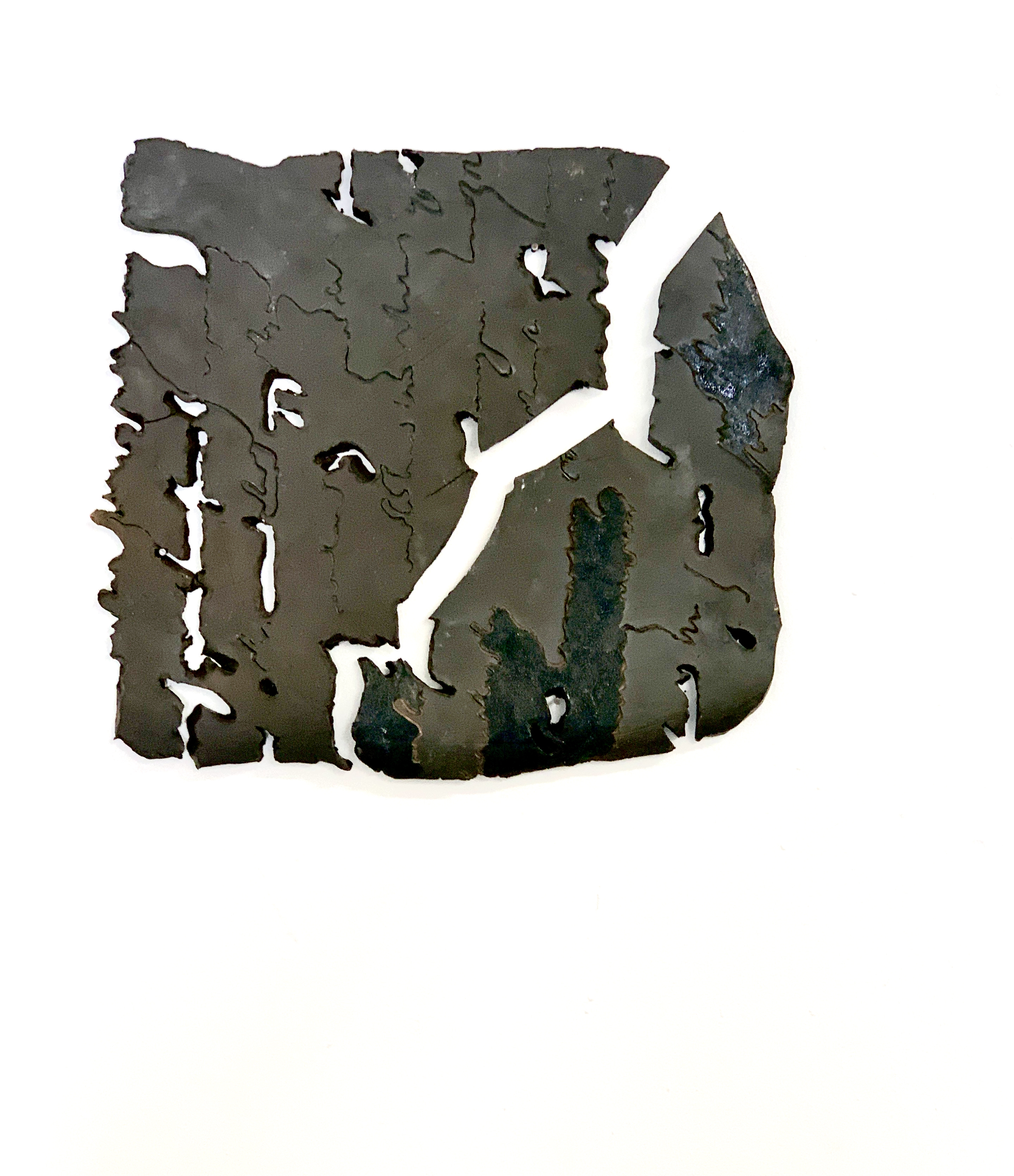
Tub to the Whale is a companion piece featuring broken ceramic tablets rendering silences within the Bill of Rights visible through a parallel hand-transcription process.
Both works take their names from the historical words of the framers of the constitution as they debated how to create these founding documents and illustrate not even these men were happy with the constitution. The “Founding Fathers” were scared of failure and thus they drafted these documents for our nation as a life-raft. By mapping the absences, an ephemeral script is revealed that tells a counternarrative to the history of our nation. This act of constitutional re-transcription invites us to approach the constitution, our history and our future, as a living, breathing space, in which the imperfect word and unspeakable truths continue to stumble together in a dance of becoming.

The four canvas paintings each stand 67” by 55.” Their dimensions take the size of the original documents and magnify them one percent for each year since their writing (234%).
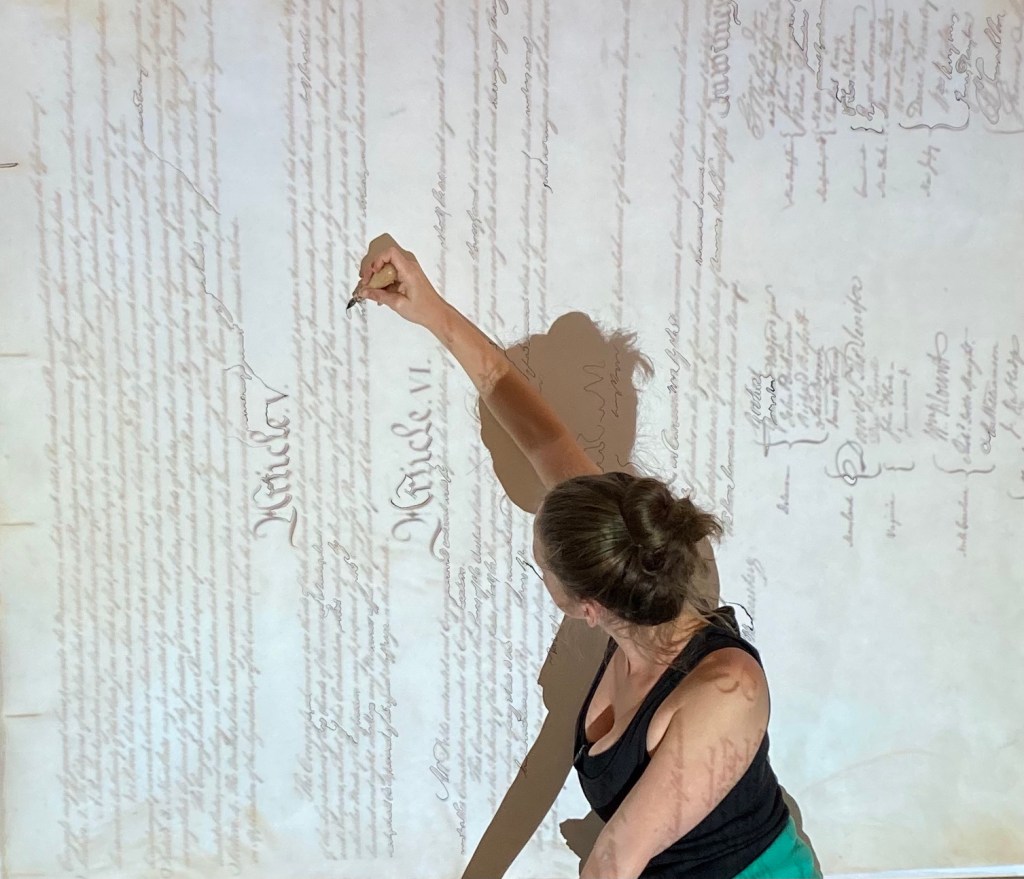
The absences are inscribed by projecting images of the original documents from the national archives upon the surfaces and tracing the gaps by hand with India ink and pen.
The canvases are partially primed, with raw edges left on the surface, amplify the incomplete nature of the document we use to govern our country. Photographs of the original documents from the National Archives were projected onto the canvases and the spaces between words and letters are traced by hand with ink and paint.
Tub to the Whale features broken ceramic tablets that render silences within the Bill of Rights visible through a hand-transcription and excavation of blank spaces between words and letters on the page. The absences are inscribed by projecting an image of the original document from the national archives upon the surface and etching and excavating the gaps and the words with a needle. The tablets are made from obsidian clay, are fired, partially glazed, and broken.

 RACHEL PARISH